
TeraWulf Says AI Leasing Now Generates 83% of Revenue as Bitcoin Mining Recedes

 Prefer us on Google



TL;DR: TeraWulf's November 6 earnings release shows $63 million in third-quarter high-performance-computing lease revenue, around 83% of its $76.2 million total. The company is increasingly an AI infrastructure business, although large non-cash gains and long-dated construction plans require careful reading.
TeraWulf is becoming a clear example of how the economics of Bitcoin mining can lead an infrastructure operator into a rather different business. In its third-quarter results published November 6, the Nasdaq-listed company said high-performance computing, or HPC, generated $63 million of lease revenue in the three months to September 30.
That represented about 83% of its $76.2 million quarterly revenue. Investors who still describe the firm primarily as a Bitcoin miner risk missing where its business is now concentrated and what its future costs may look like.
The revenue mix has already changed
The company operates existing mining infrastructure at its Lake Mariner campus but is repurposing portions of that site to support contracted computing workloads. TeraWulf said 102 megawatts of revenue-generating critical IT capacity were online at Lake Mariner at quarter-end, with another 336 megawatts under construction.
These numbers are not interchangeable with power agreements or theoretical campus capacity. A contract for future electricity or land does not mean an equivalent amount of paying data-centre capacity is already operating. The distinction matters when a company is projecting revenue from facilities that require years and significant capital to complete.
TeraWulf also reported net income of approximately $709.9 million for the quarter. But it attributed a significant benefit to a non-cash change in the fair value of warrants, while adjusted EBITDA was negative at about $12.8 million. That makes the headline profit a poor substitute for analysing recurring rental revenue, financing costs and operating cash flow.
Big contracts come with big execution demands
The company's release described a 20-year Anthropic lease covering approximately 401 megawatts at its Justified development in Kentucky, representing around $19 billion in contracted revenue over the initial term. It also described a Google credit backstop supporting anticipated project financing and a definitive engineering, procurement and construction agreement with Fluor. These are material commercial commitments, not a claim that $19 billion has already been received.
TeraWulf expects phased service availability at Justified to begin in late 2027 and continue into 2028. At Muskie, it said contracted power capacity had expanded toward one gigawatt, subject to regulatory approval. Schedules, financing and utility infrastructure remain central risks.
NewsBTC has previously examined the mining industry's move towards AI infrastructure. TeraWulf's fresh results make that theme measurable: a majority of present revenue now comes from leases rather than mining.
Why this matters to Bitcoin markets
A miner switching to AI can reduce its exposure to Bitcoin production economics, including changes in difficulty, coin price and power cost. It can also create demand for the same grid connections, facilities and financing that historically supported mining. That transition need not be immediately positive or negative for Bitcoin's network; it depends on which machines are retired, which are redeployed and whether remaining miners take up capacity.
The contrast with NewsBTC's discussion of rising network hashrate is telling. Competition for mining rewards can intensify even while some large listed companies reshape themselves into computing landlords.
The milestones to watch are completed megawatts, actual rental commencement, capital spending against guidance, contractual counterparty exposure and cash generation. TeraWulf's results show a dramatic change in revenue mix, but the hardest part of its next chapter will be delivering enormous physical projects reliably and profitably.
This article was written by the News Desk and edited by Samuel Rae.
Featured image: Rows of server racks in a data centre (illustrative data-centre photograph only --- does NOT depict an actual TeraWulf, IREN, or BitFuFu facility). Photo: Carl Lender via Wikimedia Commons, licensed under CC BY 2.0.
-- Price
This content is provided for general informational purposes only and doesn't constitute financial, investment, legal, or tax advice. Any events, rewards, online promotions, or related information mentioned herein should not be considered a recommendation, solicitation, or invitation to purchase, sell, trade, or otherwise deal in any crypto assets. Crypto assets are highly volatile and may result in loss. The availability of WEEX services, products, and related events may vary by region. You are responsible for ensuring that your participation is in accordance with applicable local laws and regulations.
You may also like

Return to Trading Ends, Facing 100% Rate Hike Next?

South Korea's AI Chip Exports Boost Expectations for Won Appreciation

Oklo Stock Faces Cash Flow Challenges, Valuation Drops to Below 4 Billion

U.S. Justice Department Charges Over 800 in Largest Fraud Crackdown, Freezes Over $1 Billion in Assets

Intel stock falls 8.1% amid investor retreat

Workday Q3 Earnings Exceed Expectations, Q4 Subscription Revenue Guidance Below Expectations

Nutanix Q1 Earnings Per Share at $0.73, Full-Year Revenue Guidance Below Expectations

Dell Just Reported Earnings and Raised Its Forecast by $10 Billion. Is the Stock a Buy After Tuesday's Selloff?

Strategy's Business Value Falls Below Its BTC and Bitmine Approaches 5% of ETH: What Remains of the Model...

Ethereum: AI Becomes a More Urgent Threat than Quantum

OPEC+ to Finalize 2027 Production Policy Amid Intensified Uncertainty from Iran War and Internal Disputes

The Battle of Personal Agents: Ambition and Restraint

Payment Giant Stripe Negotiates Acquisition Offer Valued Over $200 Billion, Launches Stablecoin Spending Card with Deel

Ansem and Satoshi Nakamoto: Living Under the Same 'Stolen' Roof

Quickben22 Rechecks 2018 Bitcoin Dormant Address List: Nearly 10,000 Dormant Addresses Restart Transfers After Eight Years, Transferring a Total of 245,000 BTC

Flop Labs Led by Arthur Hayes Launches FLOP Testnet, Initial Airdrop Scoring Not Yet Started

Bank of America Releases 2027 Investment Outlook: Global Stock Markets Could Rise 4%-8%! Improved Financial Environment Allows for Cryptocurrency Investments
Bitcoin developers propose fix for transaction verification gap affecting Lightning wallets

UBS Downgrades Aixtron to Sell, Expects AI Optical Communication Equipment Demand to Slow by 2028, Shares Plunge Over 10%

Unitree Stock Hits 20% Limit-Up: What Drove the November 23 Surge
Unitree Robotics (688836) hit its 20% limit-up at ¥708 on Nov 23, 2026. See the price data, the reported catalysts, the valuation context and what is unconfirmed.
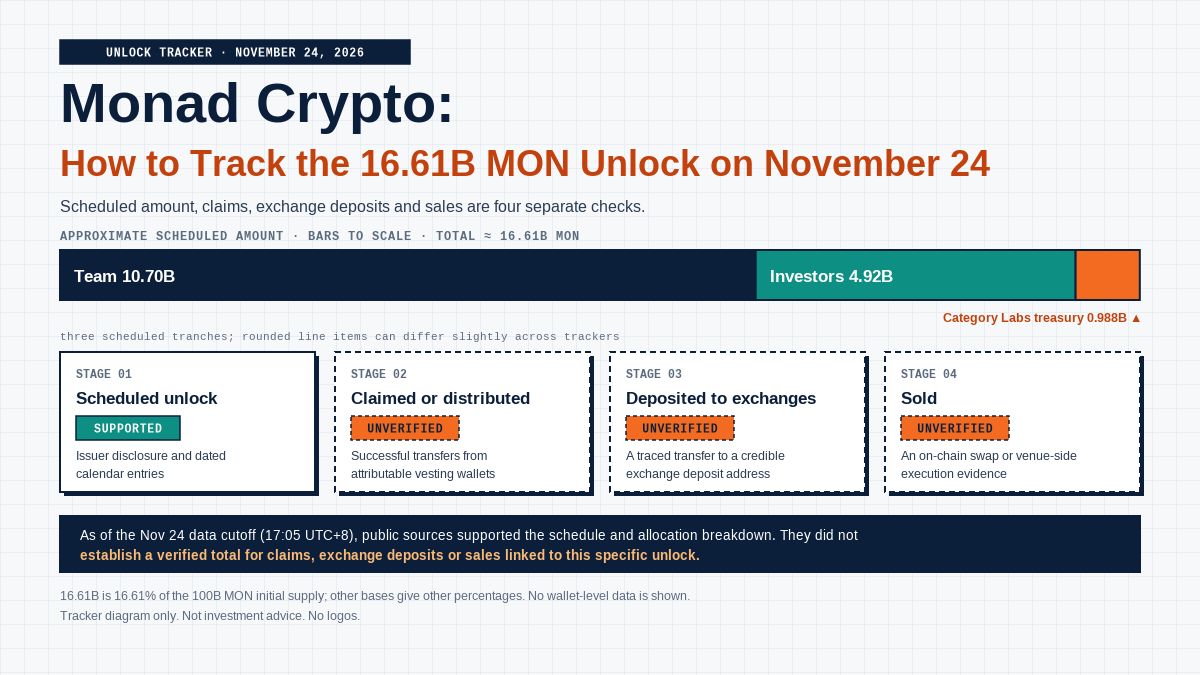
Monad Crypto: How to Track the 16.61B MON Unlock on November 24
Track Monad’s 16.61B MON unlock on November 24. See the team, investor, and treasury allocations, and learn how to verify claims and exchange deposits.

China Launches AI Standardization Pilot in Five Free Trade Zones
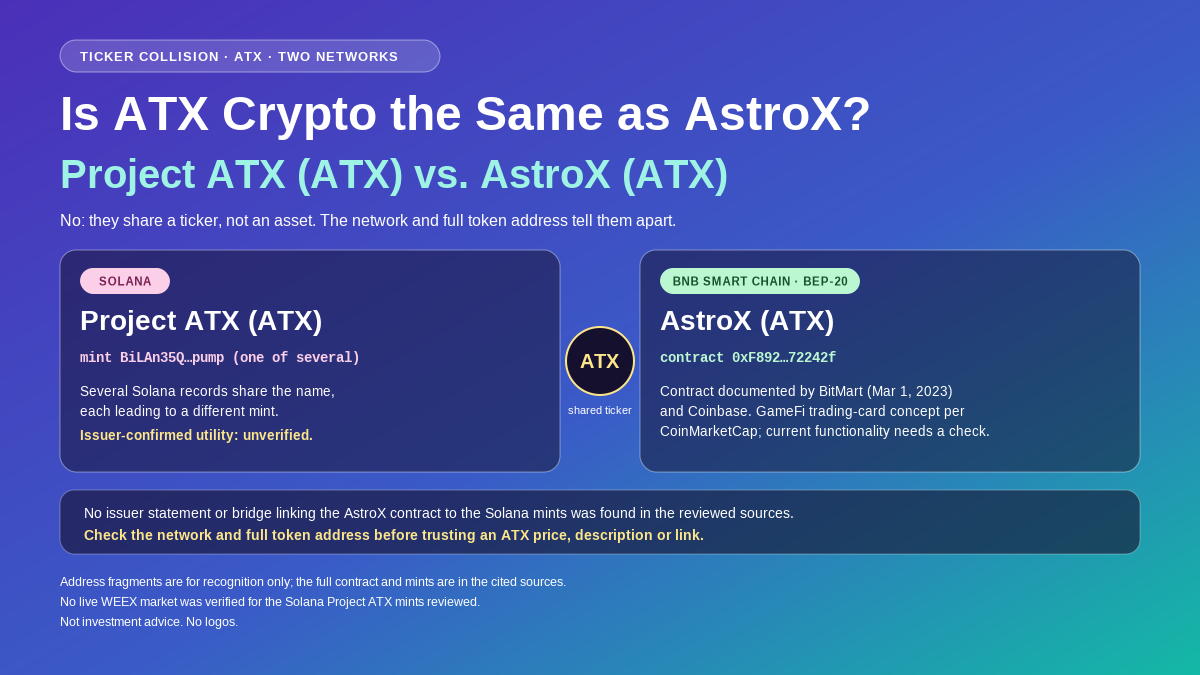
Is ATX Crypto the Same as AstroX? Project ATX (ATX) vs. AstroX (ATX)
Compare Project ATX on Solana with AstroX on BNB Smart Chain. Learn how to verify each token address before trusting an ATX price or buying guide.

Bayer Signals Future Pharmaceutical Deals May Target Mid-Stage Clinical Assets

Ethereum ETF: $96 million in net inflows stop the November bleeding
AI Agents in Payments: Cards Dominate, Yet Stablecoins Fill the 'Gap'|a16z Frontier

Grayscale Claims Bitcoin and Major Assets Are Oversold, Market Outlook Affected by AI Risks

Jensen Huang's "Miraculous Return" Forces Investment Banks to Rewrite Reports Overnight

Applied Digital Stock Surged 20% on a Hyperscaler Deal. What to Know About Its $41 Billion in Leases

Hewlett Packard Enterprise Q4 Earnings Exceed Market Expectations, Board Approves $5 Billion Stock Buyback Plan
Return to Trading Ends, Facing 100% Rate Hike Next?
South Korea's AI Chip Exports Boost Expectations for Won Appreciation
Oklo Stock Faces Cash Flow Challenges, Valuation Drops to Below 4 Billion
U.S. Justice Department Charges Over 800 in Largest Fraud Crackdown, Freezes Over $1 Billion in Assets
Intel stock falls 8.1% amid investor retreat
Workday Q3 Earnings Exceed Expectations, Q4 Subscription Revenue Guidance Below Expectations
Latest articles


Latest coin listings on WEEX


