
Ritual Raises $30 Million to Launch Token: AI Game Changer or Retail Investor Trap?

 Prefer us on Google


The community airdrop accounts for 50 million tokens, which is 0.5% of the initial supply.
Written by: Mahe, Foresight News
On October 26, the Ritual Foundation announced the launch of its AI-designed Layer 1 blockchain, Ritual, with the protocol token RITUAL simultaneously undergoing its Token Generation Event (TGE) as the network's gas token. Coinbase has listed the token, which has seen its price drop from a high of $0.08 at launch to $0.0226, with a fully diluted valuation (FDV) of approximately $220 million.
According to the official tokenomics document, the initial supply of RITUAL is 10 billion tokens, with no supply cap. At the mainnet launch, 1.8 billion tokens will be unlocked, accounting for 18% of the initial supply. The community airdrop consists of 50 million tokens (0.5% of the initial supply), aimed at eligible Infernet node operators, Frenrug users, and long-term community members, fully unlocked at launch with no lock-up period.
Currently, Ritual has opened token claims. However, according to a website created by Morsy, only 852 wallets are eligible to claim, and 403 users have already claimed 20,737,786 tokens.
The token distribution structure is as follows: core contributors hold 29% (2.9 billion tokens), ecosystem growth and development account for 25% (2.5 billion tokens), network participation and future incentives make up 14% (1.4 billion tokens), Labs investors hold 11.3% (1.13 billion tokens), the Ritual Foundation has 10% (1 billion tokens), the Labs treasury holds 5% (500 million tokens), frontier AI funding accounts for 4.7% (470 million tokens), and the foundation's private placement is 1% (100 million tokens).
The 18% unlocked at launch mainly comes from 12.5% of the ecosystem growth and development allocation, 5% from the foundation treasury, and 0.5% from the airdrop portion of network participation and future incentives.
The core team and early investors have a one-year cliff unlock period, during which locked tokens cannot participate in staking, and staking rewards are only distributed to unlocked circulating supply. The overall unlock period spans four years, with the final tokens being unlocked within four years post-mainnet launch. The annual inflation rate in the early stages of the network is approximately 5%, distributed as staking rewards to validators and AI execution nodes, with the project team expecting to gradually reduce the inflation rate as on-chain fee revenues increase.
The base transaction fee employs the EIP-1559 mechanism for permanent burning, and the design with no supply cap means the total supply is determined by the net effect of inflation and burning. The uses of the RITUAL token include staking to secure the network, paying for AI execution node operational costs, covering various on-chain operation fees (including standard gas, model inference, HTTP calls, and scheduled tasks), and future governance voting based on staking weight. Tokens bridged to other chains via LayerZero are locked on the original chain, not increasing the total supply.
$30 Million Financing, NEAR Founder Participates
In 2023, Ritual was co-founded by former Polychain Capital partner Niraj Pant and Akilesh Potti. Niraj Pant previously served as a general partner at Polychain Capital, investing in projects like Solana.
Akilesh Potti has a background in Palantir and quantitative trading. The project emerged from stealth mode in November 2023, completing approximately $25 million in financing led by Archetype, with additional investments from Accomplice, Robot Ventures, and others, followed by strategic investment from Polychain Capital, bringing the total financing to over $30 million.
The advisory team includes NEAR co-founder Illia Polosukhin, Gauntlet founder Tarun Chitra, and BitMEX co-founder Arthur Hayes.
The project initially focused on Infernet as its core product, positioning the network as a decentralized oracle network for AI workloads, later transitioning to an AI public chain. In December 2024, the Ritual Chain private testnet will launch, followed by multiple public testnet phases, including a role threshold testnet in April 2026 and the Genesis 1000 agent deployment phase in June.
Before the mainnet launch, official data revealed that its testnet has deployed over 2,000 agents, with a total transaction volume exceeding 90 million, and thousands of node operators participating in the early network operation.
Ritual positions itself as an “AI chain” with an EVM-compatible architecture. Its core design goal is to allow developers and agents to natively access AI models, Web2 services, and APIs without leaving the chain, with cryptographic guarantees. Agents can hold their own keys, maintain persistent identities, manage capital, and act autonomously based on objectives; inference results, external calls, and settlements can all be completed on the same chain without additional oracle services.
The project team claims this design shifts value capture from “paying emissions to produce AI elsewhere” to “charging fees when intelligence is consumed on-chain,” supporting use cases such as machine-to-machine payments, agent-native companies, heterogeneous computing markets, and RWA markets aimed at machine participants.
Currently, the short-term price of RITUAL is affected by airdrop sell pressure and insufficient liquidity, and whether its mid-to-long-term valuation can align with more mature AI projects still depends on the actual scale of on-chain usage and the speed of revenue generation.
-- Price
This content is provided for general informational purposes only and doesn't constitute financial, investment, legal, or tax advice. Any events, rewards, online promotions, or related information mentioned herein should not be considered a recommendation, solicitation, or invitation to purchase, sell, trade, or otherwise deal in any crypto assets. Crypto assets are highly volatile and may result in loss. The availability of WEEX services, products, and related events may vary by region. You are responsible for ensuring that your participation is in accordance with applicable local laws and regulations.
You may also like

The 10-Year Treasury Yield Just Did Something It Hasn't Done Since 2007, and History Has a Blunt Message for Stock Investors

LME Tightens Constraints on Large Aluminum Market Positions

JPMorgan: Physical AI's 'ChatGPT Moment' Expected as Early as Next Year

Bernstein Releases 'AI Sell-off Misjudgment List': Dell, Broadcom Among Top Picks, CoreWeave 'Hasn't Fallen Enough'
Where can Bitcoin count toward a US exchange’s operating reserves?

Why Is the ATX Crypto Price Different Across Platforms? Project ATX (ATX) Explained
See why the ATX crypto price varies across platforms. Compare Project ATX mint addresses, PumpSwap pools, and swap quotes for the same trade size.

Interpretation of South Korea's Digital Asset Law Proposal: ICO Ban Lifted, Banks to Lead Stablecoin

Tiger International's Q3 Customer Assets Surpass $64.8 Billion, Setting New Records in Hong Kong Market Net Inflows of Nearly $1 Billion

Ethereum ETF: $96 million in net inflows stop the November bleeding

Jito Proposal Allocates New Revenue Stream to Foundation Before Sharing with DAO After Reaching $20 Million

Aave’s USDC loans surge 36% to $2.6 billion as liquid collateral share plunges

TBV Connects with AAVE: Borrowing Money Without Giving Up Bitcoin, But Only 20 Coins Can Be Initially Accommodated

XRP borrowers face a $207,500 tipping point as one vault dominates an $8 million market

Wells Fargo Upgrades U.S. Large-Cap Stocks to 'Most Preferred' Rating, Last Week's Plunge Provides Buying Opportunity

LlamaRisk Proposes to Lower Collateral Rates for Coinbase Tokenized Stocks on Aave V4

Bonding Curve and LP Incentives: Key Modules and Evolution Trends of New Token Liquidity Mechanisms
India's Central Bank Proposes 'Trusted Person' Confirmation for Electronic Transfers

PAXG puts gold in a wallet. Getting the bullion out is another matter
XRP Ledger lending upgrade just 5 votes away from approval
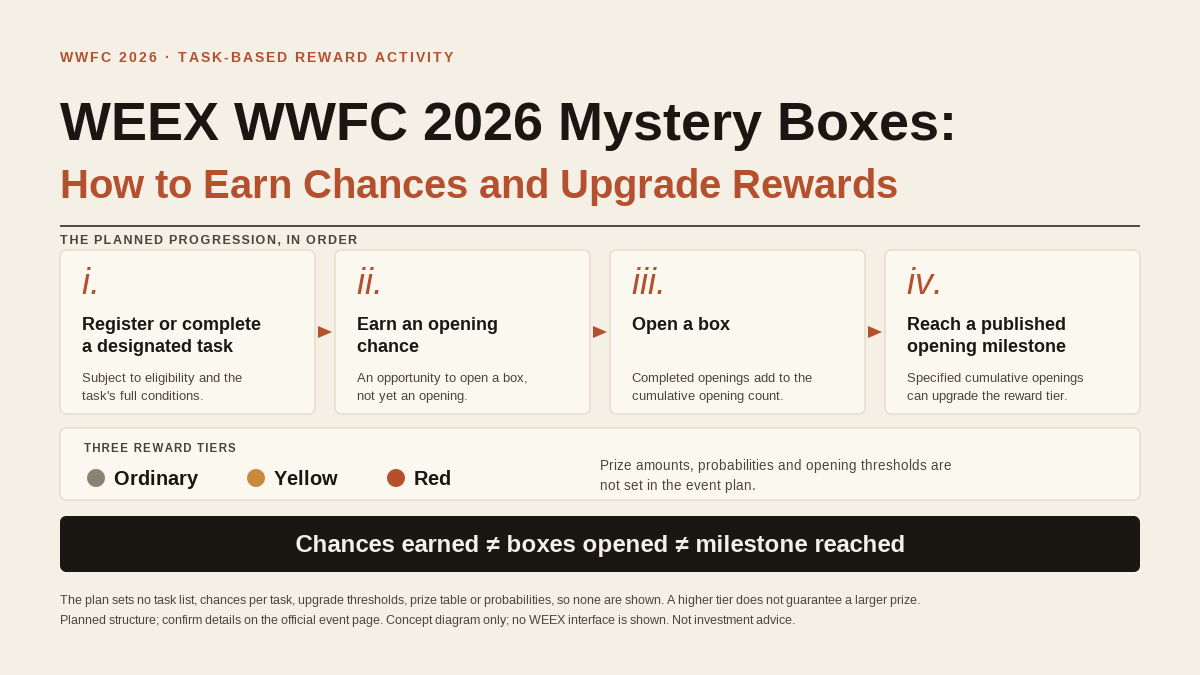
WEEX WWFC 2026 Mystery Boxes: How to Earn Chances and Upgrade Rewards
Explore WEEX WWFC 2026 mystery boxes: how to earn opening chances, understand three reward tiers, and track cumulative openings toward reward upgrades.
Crypto PNL vs Trading Volume: How WEEX WWFC 2026 Leaderboards Work
Compare crypto PNL, trading volume, and ROI with worked examples, and learn how to read the four planned WEEX WWFC 2026 leaderboards accurately.

Cardano’s $5M event budget faces 5 times more opposition

Repaying a Bitcoin-backed loan on Sui can leave you waiting to withdraw native BTC
Why Bitcoin’s quantum security upgrade may take years
Cysic CEO: Over 6 Million BTC Public Keys Exposed, Accounting for 31.2% of Circulation

Penetrating Social Trading Ledgers: Who is Really Making Profits Amidst the Traffic Noise?

Nearly two-thirds of Square Bitcoin payments were under $20

India Plans to Ease Disclosure Requirements for Foreign Investment Funds
Overview of 6 New AI Mining Projects: Perhaps the Most Noteworthy Track After Privacy Narratives
Bitcoin buyers face a trading issue as stablecoins just suffer their biggest supply drop since 2022
The 10-Year Treasury Yield Just Did Something It Hasn't Done Since 2007, and History Has a Blunt Message for Stock Investors
LME Tightens Constraints on Large Aluminum Market Positions
JPMorgan: Physical AI's 'ChatGPT Moment' Expected as Early as Next Year
Bernstein Releases 'AI Sell-off Misjudgment List': Dell, Broadcom Among Top Picks, CoreWeave 'Hasn't Fallen Enough'
Where can Bitcoin count toward a US exchange’s operating reserves?
Why Is the ATX Crypto Price Different Across Platforms? Project ATX (ATX) Explained
See why the ATX crypto price varies across platforms. Compare Project ATX mint addresses, PumpSwap pools, and swap quotes for the same trade size.
Latest articles


Latest coin listings on WEEX


