
Linera Community Fundraising Falls Short, Why Is the 'a16z Concept' Struggling to Sell?

 Prefer us on Google


Author: Zhou, ChainCatcher
On September 9, Linera announced the end of its $LNRA community fundraising round, raising a total of $848,000 from 617 participants across 69 countries, falling short of the $1.5 million minimum fundraising target. The official statement indicated that funds have been refunded back to participants' wallets.
Linera, backed by institutions like a16z, had raised over $10 million in two funding rounds and was once considered a candidate for the next generation of public chains in the capital market. The community round was priced at $0.16, with an official promotional price as low as $0.02, and incentives to attract participants. Despite this, the $1.5 million threshold was not met. The market seems to have lost faith in the hype!
From Diem Legacy to Prediction Markets, Linera's Three-Year Journey
According to official information, Linera is a Layer 1 public chain that employs a microchain architecture, allowing each user and application to use their own lightweight execution chain for parallel processing.
From 2022 to 2023, it was positioned as a next-generation high-performance public chain, emphasizing real-time applications and lower latency. Founder Mathieu Baudet had previously participated in FastPay research at Meta, and the official claim is that Linera aims to turn that work into a viable chain.
During the same period, Meta also had Diem, which was the successor to the earlier Libra stablecoin project, later halted due to regulatory issues. After the Diem team was disbanded, some members founded Aptos and Sui, continuing to use Move, while Linera opted for Rust.
In terms of financing, Linera completed a $6 million seed round in June 2022, with investors including a16z, Tribe Capital, Cygni Capital, and Kima Ventures. In August 2023, it raised another $6 million, with a16z continuing to participate, along with Borderless Capital, GSR, DFG, Matrixport Ventures, and Flow Traders. The total from both rounds was approximately $12 million.
Despite being over three years since the mainnet launch, the product side later introduced Linera Markets, a short-cycle on-chain prediction market that offers minute-by-minute price fluctuations for various assets including BTC, ETH, and SOL.
In August, Baudet published a post to reframe the narrative, stating that fast-cycle prediction markets like the five-minute BTC price fluctuations are generally more popular than expected, and repositioned Linera Markets' one-minute market from a product experiment to a key narrative, aiming to create applications that generate revenue for the chain.
The official statement indicated that Linera Markets has been running on the testnet for over twenty-five weeks, with approximately 85 million transactions and over 50,000 users, with daily participation exceeding 8,000.
The community round public sale was subsequently launched, with pre-registration opening in late August, and the window officially opening on September 1, initially set to close on the 8th but extended by ten hours. The minimum target was $1.5 million, with a hard cap of $8 million.
According to the official sales page, participants were required to complete identity verification on Sonar before purchasing with USDC on the Base chain, with a minimum purchase of $100 and a wallet cap of approximately $100,000. U.S. investors had to meet accredited investor requirements and lock their funds for twelve months, with some regions unable to register.
The testnet badge corresponded to a separate airdrop, accounting for about 1% of the total token supply; during the community round sale, users holding badges were given priority in the reserved pool, while others entered the open pool, with excess distributed proportionally.
The community round was priced at $0.16, corresponding to a fully diluted valuation of $1.6 billion. The first $1.6 million in purchases could earn a Founder status, and after the mainnet launch, a transaction in the official application would yield seven tokens from the community reserve, effectively costing $0.02 per token.
However, the results of this community sale were disappointing. The subscription amount on the day after the window opened was approximately 1.1% of the hard cap, with many users questioning the project's previous claims about benchmarking leading trading applications and aligning with institutional round valuations.
Some also believed the sales rules were difficult to understand, with unclear eligibility for additional tokens and unlocking times, and many Asian addresses were blocked during the KYC process. KOLs in the blockchain space indicated that if Linera had launched alongside Aptos and Sui, it might have been viewed as a high-return airdrop target, but retail investors are currently less inclined to buy into institutional narratives.
Ultimately, a total of $848,000 was raised, about 56.6% of the minimum threshold and approximately 10.6% of the hard cap, with the official announcement confirming that the minimum target was not met. Chief Product Officer Ryan Trost stated that the team consists of about five people with limited spending, and this round aimed to distribute tokens to core users willing to participate before the project generates revenue. The average purchase amount from testnet users was higher than expected, but the numbers indicated that this round must be refunded.
The Cold Market Is Not Unique to Linera
Widening the perspective, Linera's situation is not an isolated case. According to RootData, from January to August 2026, the total disclosed financing in the crypto industry was approximately $11.97 billion, a year-on-year decrease of about 52.9%, with the primary market accounting for about $11.52 billion, down approximately 14.6%, and 329 financing events, down about 31.7% year-on-year. The structure of the crypto market has changed, with total financing still supported by a few large transactions, and institutional investments becoming more concentrated.
Public sales that retail investors can directly participate in have shrunk even more significantly. Data tracking public sales shows that in the first quarter of 2026, ICOs, IDOs, and IEOs totaled about $390 million across 105 events. By early June, this had dropped to about $58 million across 37 events, with both the amount raised and the number of events significantly lower than in the first quarter. In the first quarter of 2025, it had reached about $849 million across 429 events.
This indicates that the willingness of the primary market to bear early uncertainties is decreasing, and the remaining funds are more selective about projects.
Many star projects have also performed poorly in the secondary market. MegaETH's pre-market was once speculated to reach a $6 billion FDV, officially listing on April 30 this year with an opening FDV between $1.6 billion and $2 billion, peaking on the listing day, but as of the time of writing, the price has fallen to $0.037, with an FDV of only $370 million, down 80% from its peak.
Monad raised about $225 million in an institutional round led by Paradigm in 2024, and another $269 million in a public sale on Coinbase in November 2025. After listing, its FDV once surged to nearly $4.7 billion, but has now dropped to around $2.3 billion, a decline of 52% from its peak.
Plasma used the same Sonar public offering system as Linera, targeting $50 million but actually over-raised to $373 million, priced at a $500 million FDV. On its first day of listing, it surged to a historical high of $1.68 per token, but has since fallen to about $0.084, a drop of 95% from its peak. As of the time of writing, the fully diluted valuation is about $650 million, with nearly all the premium generated post-listing wiped out.
In the past, the primary market was willing to pay for narratives; if the story was compelling enough and liquidity was hot, public offerings could be fully subscribed or even oversubscribed. However, since the beginning of this year, both the scale and number of public sales have declined. Linera entered the market with institutional valuations from the old cycle and a new narrative, but the overall market is no longer buying into the hype.
The Narrative Is Hard to Sell
In fact, even established public chains are facing difficulties. As powerful new chains continue to enter the market, the block space of older chains is increasingly resembling homogeneous commodities, with users and transaction fees being siphoned off by a few networks with applications. Relying solely on throughput and zero-knowledge proofs has become insufficient to justify new valuations.
Thus, older chains are also beginning to develop products.
On September 8, Ethereum Layer 2 Scroll provided a progress update in its governance forum, preparing to gradually transition from a general-purpose zkEVM to a dedicated network around the AI product Compass, with a transition period of about nine months. This is not a formal proposal, and subsequent matters involving network transformation and DAO approval will be proposed separately.
Its products include the user-facing Compass, the Compass API connecting over thirty large models, a privacy layer called CENO, and payment settlement products like USX. The team claims that CENO has engaged with over thirty potential clients, with twelve currently conducting proof of concept, while Compass is still in early consumer validation.
Similar actions are not limited to this one project. MegaETH has shut down its speculative MegaMafia accelerator, shifting towards self-developed consumer applications and using the profits from its stablecoin product USDm for buybacks and burns. Arbitrum, Sei, and Sophon are also discussing bringing applications and transaction fees back to their own accounts.
Xiao Feng from Wanxiang Blockchain wrote this year that about 90% of crypto projects still lack clear users, sustainable revenue, or regulatory compliance. The next phase will focus on revenue, stability, and connections to the real economy; white papers and performance metrics alone are no longer sufficient to support valuations.
Buyers are no longer bidding based on the size of the story but are looking for actual users and revenue. In other words, the path of solely relying on narratives to inflate FDV has become increasingly difficult to navigate. The winds of the crypto capital market have shifted.
-- Price
This content is provided for general informational purposes only and doesn't constitute financial, investment, legal, or tax advice. Any events, rewards, online promotions, or related information mentioned herein should not be considered a recommendation, solicitation, or invitation to purchase, sell, trade, or otherwise deal in any crypto assets. Crypto assets are highly volatile and may result in loss. The availability of WEEX services, products, and related events may vary by region. You are responsible for ensuring that your participation is in accordance with applicable local laws and regulations.
You may also like

The 10-Year Treasury Yield Just Did Something It Hasn't Done Since 2007, and History Has a Blunt Message for Stock Investors

LME Tightens Constraints on Large Aluminum Market Positions

JPMorgan: Physical AI's 'ChatGPT Moment' Expected as Early as Next Year

Bernstein Releases 'AI Sell-off Misjudgment List': Dell, Broadcom Among Top Picks, CoreWeave 'Hasn't Fallen Enough'
Where can Bitcoin count toward a US exchange’s operating reserves?

Why Is the ATX Crypto Price Different Across Platforms? Project ATX (ATX) Explained
See why the ATX crypto price varies across platforms. Compare Project ATX mint addresses, PumpSwap pools, and swap quotes for the same trade size.

Interpretation of South Korea's Digital Asset Law Proposal: ICO Ban Lifted, Banks to Lead Stablecoin
Tiger International's Q3 Customer Assets Surpass $64.8 Billion, Setting New Records in Hong Kong Market Net Inflows of Nearly $1 Billion

Ethereum ETF: $96 million in net inflows stop the November bleeding

Jito Proposal Allocates New Revenue Stream to Foundation Before Sharing with DAO After Reaching $20 Million
Aave’s USDC loans surge 36% to $2.6 billion as liquid collateral share plunges

TBV Connects with AAVE: Borrowing Money Without Giving Up Bitcoin, But Only 20 Coins Can Be Initially Accommodated

XRP borrowers face a $207,500 tipping point as one vault dominates an $8 million market

Wells Fargo Upgrades U.S. Large-Cap Stocks to 'Most Preferred' Rating, Last Week's Plunge Provides Buying Opportunity

LlamaRisk Proposes to Lower Collateral Rates for Coinbase Tokenized Stocks on Aave V4

Bonding Curve and LP Incentives: Key Modules and Evolution Trends of New Token Liquidity Mechanisms
India's Central Bank Proposes 'Trusted Person' Confirmation for Electronic Transfers

PAXG puts gold in a wallet. Getting the bullion out is another matter
XRP Ledger lending upgrade just 5 votes away from approval
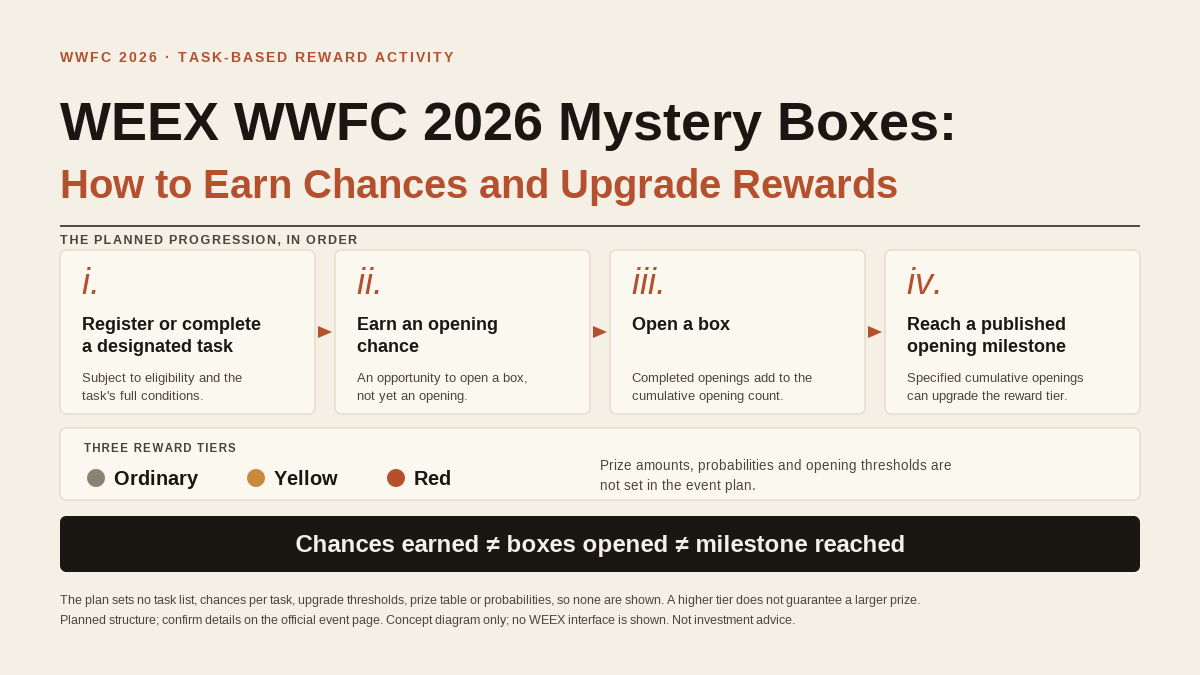
WEEX WWFC 2026 Mystery Boxes: How to Earn Chances and Upgrade Rewards
Explore WEEX WWFC 2026 mystery boxes: how to earn opening chances, understand three reward tiers, and track cumulative openings toward reward upgrades.
Crypto PNL vs Trading Volume: How WEEX WWFC 2026 Leaderboards Work
Compare crypto PNL, trading volume, and ROI with worked examples, and learn how to read the four planned WEEX WWFC 2026 leaderboards accurately.

Cardano’s $5M event budget faces 5 times more opposition

Repaying a Bitcoin-backed loan on Sui can leave you waiting to withdraw native BTC
Why Bitcoin’s quantum security upgrade may take years
Cysic CEO: Over 6 Million BTC Public Keys Exposed, Accounting for 31.2% of Circulation

Penetrating Social Trading Ledgers: Who is Really Making Profits Amidst the Traffic Noise?

Nearly two-thirds of Square Bitcoin payments were under $20

India Plans to Ease Disclosure Requirements for Foreign Investment Funds
Overview of 6 New AI Mining Projects: Perhaps the Most Noteworthy Track After Privacy Narratives
Bitcoin buyers face a trading issue as stablecoins just suffer their biggest supply drop since 2022
The 10-Year Treasury Yield Just Did Something It Hasn't Done Since 2007, and History Has a Blunt Message for Stock Investors
LME Tightens Constraints on Large Aluminum Market Positions
JPMorgan: Physical AI's 'ChatGPT Moment' Expected as Early as Next Year
Bernstein Releases 'AI Sell-off Misjudgment List': Dell, Broadcom Among Top Picks, CoreWeave 'Hasn't Fallen Enough'
Where can Bitcoin count toward a US exchange’s operating reserves?
Why Is the ATX Crypto Price Different Across Platforms? Project ATX (ATX) Explained
See why the ATX crypto price varies across platforms. Compare Project ATX mint addresses, PumpSwap pools, and swap quotes for the same trade size.
Latest articles


Latest coin listings on WEEX


