
Decibel launches Aptos Encrypted Mempool to protect traders from MEV

 Prefer us on Google


Decibel Trade has introduced Aptos' Encrypted Mempool on its decentralized trading platform, allowing users to conceal pending order details in an effort to reduce frontrunning and other transaction manipulation risks.
Summary
- Decibel Trade has activated Aptos' Encrypted Mempool, allowing traders to conceal transaction details before execution.
- The optional feature encrypts order payloads while keeping sender addresses and gas fees visible.
- Validators collectively decrypt orders after block finalization, using the network's existing security mechanism.
- Aptos testing recorded approximately 20 milliseconds of additional latency per block in a 50-node benchmark.
- The launch follows the October 12 mainnet activation of Encrypted Mempool under AIP-144.
According to an October 21 announcement from Aptos, the feature is available on an opt-in basis, letting traders encrypt individual transaction payloads before submission while keeping their trades settled onchain.
Decibel Trade enables encrypted orders to reduce MEV exposure
The new feature allows Decibel users to keep the contents of their trading orders private while transactions await inclusion in a block. It is intended to address maximal extractable value (MEV), which can arise when participants use advance knowledge of pending transactions to influence execution.
Encrypted Mempool is now supported on @DecibelTrade, built on @Aptos and incubated by Aptos Labs.
When a trader opts in, the order's payload is encrypted client-side, ordered while encrypted, and decrypted by validators together only after the block is finalized. Sender and gas... pic.twitter.com/iSaX27JlSw
--- Aptos Labs (@AptosLabs) October 21, 2026
Under conventional public mempool arrangements, block producers can inspect transaction details before deciding their order. Automated traders may exploit that information by placing transactions ahead of another user's order or surrounding it with their own trades.
Aptos' implementation changes which information validators can access during this stage. Traders who select encryption have their transaction payloads concealed before those transactions reach the network.
The encrypted information includes the function being called and its inputs, such as the trading instructions included in the transaction. Sender addresses and gas-fee information remain visible.
Orders are decrypted after the block's contents have been finalized through consensus, immediately before execution. Transactions remain recorded on the blockchain, preserving the ability to examine their contents after processing.
Encryption is optional for each transaction. Decibel users can continue submitting ordinary transactions without activating the feature.
The Aptos network introduced its encrypted mempool on October 12, making the technology available to supported wallets and applications before Decibel's October 21 activation.
Aptos uses validator encryption to protect pending transactions
The technical framework behind the feature is described in Aptos Improvement Proposal 144, authored by Aptos Labs cryptographer Rex Fernando.
AIP-144 introduces batch threshold encryption, allowing validators to collectively decrypt transactions after consensus has determined their ordering.
The network generates an encryption key for each epoch, with validators holding separate decryption shares. A single validator cannot independently reveal a pending transaction's encrypted contents.
Aptos states that decryption requires the same stake-weighted threshold used by its consensus mechanism. The arrangement avoids relying on a separate private transaction relay or external group of key holders.
Aptos described the design in its October 12 technical announcement, explaining that the transaction payload remains hidden during ordering and becomes readable only after finalization.
The system uses a batch process designed to reduce the computation and communication required for decryption. According to the network, a single threshold reconstruction can process an entire block regardless of how many encrypted transactions it contains.
Performance testing against the AptosBFT consensus implementation recorded approximately 20 milliseconds of additional latency per block in a 50-node benchmark.
The original proposal describes support for more than 1,000 transactions per second, although those figures represent technical performance targets and testing rather than Decibel's observed trading throughput.
Aptos' TypeScript software development kit supports encrypted submissions from version 7.0.0 onward. Existing Move smart contracts do not require modification to use the network-level capability.
The Petra wallet was the first wallet to make encryption available directly through its transaction signing process.
Decibel expands Aptos trading infrastructure after February launch
Decibel is an onchain trading exchange incubated by Aptos Labs. It launched on mainnet in February 2026, supporting an order-book trading model in which matching and settlement occur through blockchain infrastructure.
Aptos Foundation and Aptos Labs previously committed over $50 million toward trading infrastructure, research and other ecosystem initiatives, including Decibel.
In May, crypto.news reported on Aptos' encryption plans, when the network was preparing native transaction privacy protections against frontrunning and censorship.
The proposal has since moved from the development stage to mainnet availability, with Decibel now supporting encrypted submissions for its traders.
Independent data from DefiLlama placed Decibel's total value locked near $29.4 million on October 21, compared with approximately $51 million at the end of February. The measure represents assets deposited in the protocol, not cumulative trading volume.
The encryption framework has defined limitations. Transaction senders and fees remain publicly visible, and the initial design focuses on concealing payloads during block ordering.
AIP-144 identifies transaction simulation as another privacy consideration because simulations performed with unencrypted transaction contents may expose information before the final encrypted submission. The proposal discusses separating simulation and submission endpoints or disabling simulation by default when encryption is enabled.
Meanwhile, Aptos gained 8.83% to trade at $0.834274 at press time, according to crypto.news market data. The cryptocurrency recorded $73.9 million in 24-hour trading volume, with prices ranging between $0.761868 and $0.843564.
The rally brought APT's weekly gain to 1.84%, while its monthly performance stood at 8.29%. The token remained 73.26% below its price from a year ago.
APT's market capitalization reached approximately $737.1 million, placing it 92nd among cryptocurrencies. Its circulating supply stood near 883.3 million tokens.
-- Price
This content is provided for general informational purposes only and doesn't constitute financial, investment, legal, or tax advice. Any events, rewards, online promotions, or related information mentioned herein should not be considered a recommendation, solicitation, or invitation to purchase, sell, trade, or otherwise deal in any crypto assets. Crypto assets are highly volatile and may result in loss. The availability of WEEX services, products, and related events may vary by region. You are responsible for ensuring that your participation is in accordance with applicable local laws and regulations.
You may also like

The 10-Year Treasury Yield Just Did Something It Hasn't Done Since 2007, and History Has a Blunt Message for Stock Investors

LME Tightens Constraints on Large Aluminum Market Positions

JPMorgan: Physical AI's 'ChatGPT Moment' Expected as Early as Next Year

Bernstein Releases 'AI Sell-off Misjudgment List': Dell, Broadcom Among Top Picks, CoreWeave 'Hasn't Fallen Enough'

Where can Bitcoin count toward a US exchange’s operating reserves?

Why Is the ATX Crypto Price Different Across Platforms? Project ATX (ATX) Explained
See why the ATX crypto price varies across platforms. Compare Project ATX mint addresses, PumpSwap pools, and swap quotes for the same trade size.

Interpretation of South Korea's Digital Asset Law Proposal: ICO Ban Lifted, Banks to Lead Stablecoin

Tiger International's Q3 Customer Assets Surpass $64.8 Billion, Setting New Records in Hong Kong Market Net Inflows of Nearly $1 Billion

Ethereum ETF: $96 million in net inflows stop the November bleeding

Jito Proposal Allocates New Revenue Stream to Foundation Before Sharing with DAO After Reaching $20 Million

Aave’s USDC loans surge 36% to $2.6 billion as liquid collateral share plunges

TBV Connects with AAVE: Borrowing Money Without Giving Up Bitcoin, But Only 20 Coins Can Be Initially Accommodated

XRP borrowers face a $207,500 tipping point as one vault dominates an $8 million market

Wells Fargo Upgrades U.S. Large-Cap Stocks to 'Most Preferred' Rating, Last Week's Plunge Provides Buying Opportunity

LlamaRisk Proposes to Lower Collateral Rates for Coinbase Tokenized Stocks on Aave V4

Bonding Curve and LP Incentives: Key Modules and Evolution Trends of New Token Liquidity Mechanisms
India's Central Bank Proposes 'Trusted Person' Confirmation for Electronic Transfers

PAXG puts gold in a wallet. Getting the bullion out is another matter

XRP Ledger lending upgrade just 5 votes away from approval
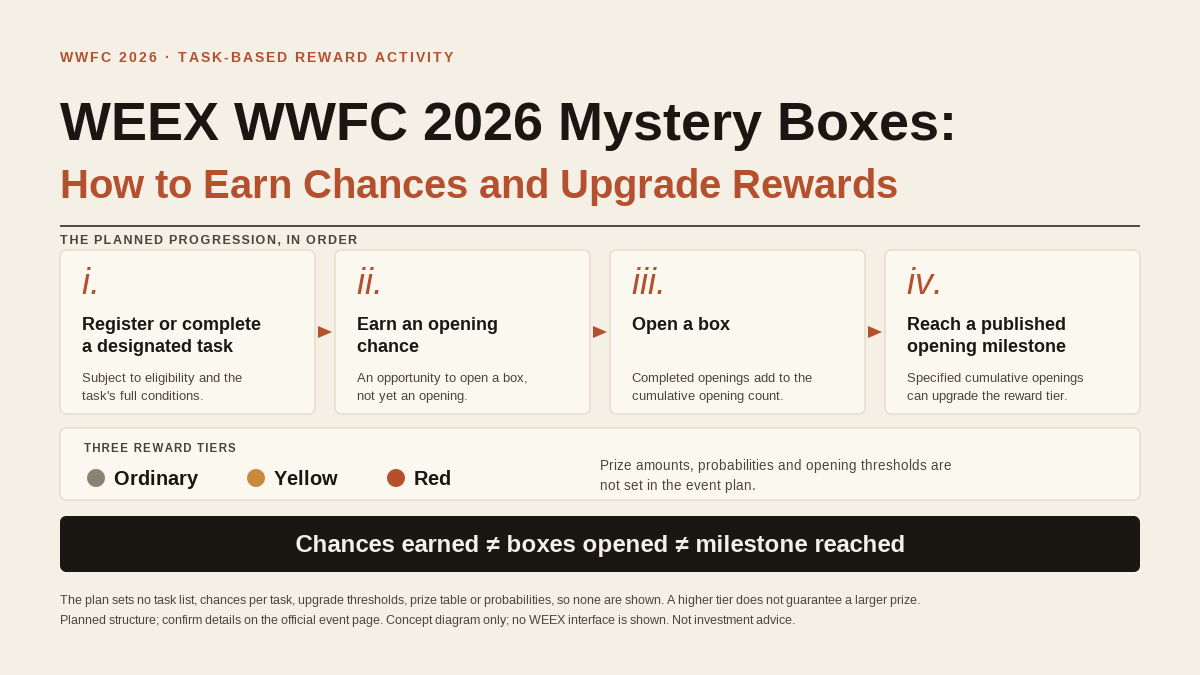
WEEX WWFC 2026 Mystery Boxes: How to Earn Chances and Upgrade Rewards
Explore WEEX WWFC 2026 mystery boxes: how to earn opening chances, understand three reward tiers, and track cumulative openings toward reward upgrades.

Crypto PNL vs Trading Volume: How WEEX WWFC 2026 Leaderboards Work
Compare crypto PNL, trading volume, and ROI with worked examples, and learn how to read the four planned WEEX WWFC 2026 leaderboards accurately.

Cardano’s $5M event budget faces 5 times more opposition

Repaying a Bitcoin-backed loan on Sui can leave you waiting to withdraw native BTC

Why Bitcoin’s quantum security upgrade may take years

Cysic CEO: Over 6 Million BTC Public Keys Exposed, Accounting for 31.2% of Circulation

Penetrating Social Trading Ledgers: Who is Really Making Profits Amidst the Traffic Noise?

Nearly two-thirds of Square Bitcoin payments were under $20

India Plans to Ease Disclosure Requirements for Foreign Investment Funds
Overview of 6 New AI Mining Projects: Perhaps the Most Noteworthy Track After Privacy Narratives
Bitcoin buyers face a trading issue as stablecoins just suffer their biggest supply drop since 2022
The 10-Year Treasury Yield Just Did Something It Hasn't Done Since 2007, and History Has a Blunt Message for Stock Investors
LME Tightens Constraints on Large Aluminum Market Positions
JPMorgan: Physical AI's 'ChatGPT Moment' Expected as Early as Next Year
Bernstein Releases 'AI Sell-off Misjudgment List': Dell, Broadcom Among Top Picks, CoreWeave 'Hasn't Fallen Enough'
Where can Bitcoin count toward a US exchange’s operating reserves?
Why Is the ATX Crypto Price Different Across Platforms? Project ATX (ATX) Explained
See why the ATX crypto price varies across platforms. Compare Project ATX mint addresses, PumpSwap pools, and swap quotes for the same trade size.
Latest articles


Latest coin listings on WEEX


