
Coinbase’s Texas move gets a shareholder suit dismissed over Delaware-era claims

 Prefer us on Google


Coinbase's move to Texas changed the rule a shareholder had to satisfy before suing its directors over alleged conduct from the company's Delaware years. In an October 2 ruling, the Texas Business Court dismissed Gary Guillaume's derivative action because he had not first demanded that Coinbase take action on the claims.
The dismissal was without prejudice, and the court did not decide whether the alleged misconduct occurred. Its consequential finding concerned who could pursue claims belonging to Coinbase: Texas's demand requirement applied to the shareholder's authority to sue, even though the court assumed without deciding that Delaware law governed the underlying claims.
On October 9, Coinbase CEO Brian Armstrong praised the precedent as encouraging more companies to incorporate in Texas and thanked Greg Abbott. That endorsement came a week after Judge Andrea K. Bouressa signed the order. The immediate lesson for public shareholders is that the law governing a company's past conduct and the law governing their ability to challenge it can diverge after reincorporation.
Why older claims faced Texas's demand rule
A derivative action lets a shareholder pursue a claim on the corporation's behalf. The claim belongs to the company, and the shareholder seeks to exercise authority ordinarily held by its board. That distinction explains why the first dispute here concerned permission to bring the action rather than the directors' alleged wrongdoing.
The parties agreed that Guillaume filed his suit on April 16, 2026, alleging misconduct between April 14, 2021, and June 5, 2023. Coinbase was incorporated in Delaware during that earlier period. Its Texas conversion became effective on December 15, 2025, several months before the suit was filed.
Under the Delaware framework described in the opinion, a derivative plaintiff can make a demand or plead that doing so would be futile. Futility requires particularized allegations about individual directors, examining whether they received a material personal benefit, face a substantial likelihood of liability, or lack independence from someone who benefited or faces such liability. At least half the relevant board must satisfy the test.
Guillaume tried that route. He did not make a pre-suit demand.
For this action involving a public company, Texas required a particularized written demand identifying the disputed conduct and requesting suitable corporate action. The October 2 opinion described an ordinary 90-day wait after demand, with derivative proceedings permitted from the 91st day. Corporate rejection of the demand or irreparable injury to the corporation can shorten the waiting period. Both exceptions leave the written-demand requirement in place.
Guillaume's futility allegations could not substitute for the written request Texas required. The missing demand was enough to end this action before the court reached its merits.
Guillaume argued that Delaware law should apply because the claims arose before Coinbase's Texas move. Bouressa accepted that premise about the underlying claims for purposes of the analysis, without resolving it.
She then considered a separate question: which state's law governed the shareholder's authority to file those claims for Coinbase?
The court's answer turned on the company's incorporation when the shareholder exercised that authority. A corporate claim can arise under one state's law, while a later effort to pursue it derivatively is governed by another state's rules. The opinion reasoned that a shareholder does not acquire a vested right, when a corporate claim arises, to bring it personally on the corporation's behalf at some later date.
That reasoning gives reincorporation consequences beyond future board decisions. In this case, the December 2025 conversion affected the route for challenging alleged conduct dating back to 2021.
Coinbase's conversion disclosures supplied Guillaume with another argument. He relied on language preserving eligible shareholders' standing and ability to bring derivative claims concerning earlier conduct, subject to continued ownership.
The opinion's treatment of that language was narrower than Guillaume's interpretation. The court said it did not promise that Delaware law would continue to govern shareholder authority after conversion. The disclosures also expressly said Texas law would govern Coinbase's affairs following the move.
Bouressa further found that Guillaume offered no argument or evidence showing how losing the option to plead demand futility adversely affected his ability to sue. He had not shown that making a demand was impossible, irreparably harmful or prejudicial, or that the futility option gave him a particular advantage.
The court also found no evidence that Coinbase had successfully contracted around the Texas requirement.
Concentrated votes, a different accountability route
The governance backdrop makes that distinction matter. Coinbase's November 2025 information statement said the Armstrong- and Fred Ehrsam-associated consenting group held approximately 78.40% of voting power at the October 31, 2025 record date. The group approved the conversion by written consent on November 4.
Coinbase said a committee of Christa Davies and Paul Clement, whom the board found independent and disinterested, evaluated Delaware, Nevada and Texas before recommending Texas. The board unanimously approved the move.
The company cited greater litigation predictability, potential savings on defense costs, indemnification and insurance, and Texas's crypto-friendly environment.
The consent figure describes approval in 2025. In its April 24, 2026 proxy, Coinbase reported March 31 voting-power figures of 49.6% for Armstrong, 18.9% for separately listed Armstrong-associated entities and trusts with an independent trustee, and 10.6% for Ehrsam. The figures use SEC beneficial-ownership rules, including qualifying options. Class B shares carry 20 votes each, compared with one for Class A.
Coinbase's February 2026 annual filing described Armstrong and the independent trustee collectively as able to exercise majority voting rights. Its July 30 quarterly filing reported no material changes to the annual risk factors, without supplying a new individual voting-power percentage.
-- Price
This content is provided for general informational purposes only and doesn't constitute financial, investment, legal, or tax advice. Any events, rewards, online promotions, or related information mentioned herein should not be considered a recommendation, solicitation, or invitation to purchase, sell, trade, or otherwise deal in any crypto assets. Crypto assets are highly volatile and may result in loss. The availability of WEEX services, products, and related events may vary by region. You are responsible for ensuring that your participation is in accordance with applicable local laws and regulations.
You may also like

SEC staff issue Molecule no-action letter on biotech tokens
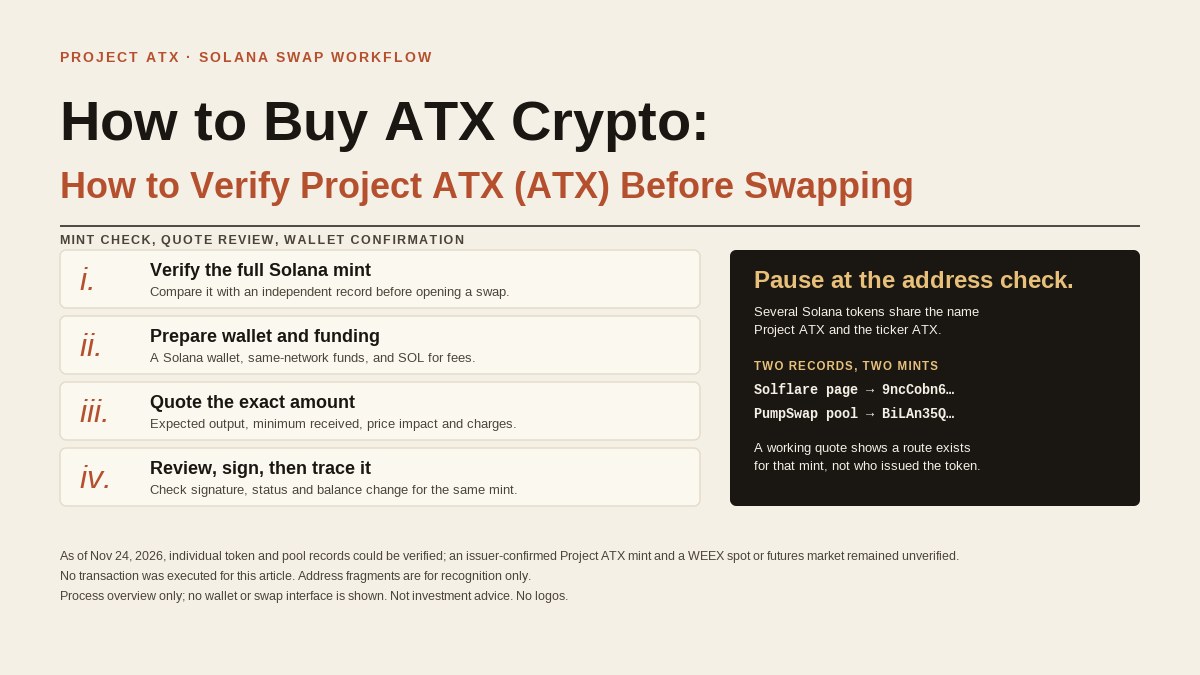
How to Buy ATX Crypto: How to Verify Project ATX (ATX) Before Swapping
Learn how to buy ATX crypto on Solana. Verify the Project ATX mint, review swap quotes and fees, and confirm the exact token you receive on-chain.

Interpretation of South Korea's Digital Asset Law Proposal: ICO Ban Lifted, Banks to Lead Stablecoin

Binance to suspend crypto withdrawals across all networks on Nov. 25

[Basic Law] ④ The Exchange is Responsible for Public Disclosure of Listed Digital Assets

[Basic Law] ② Tether and Circle Must Establish Branches and Register with the Financial Services Commission to Operate in Korea

New York Judge Rejects Attorney General's Request for Temporary Restraining Order Against Kalshi
White House reviews final CFTC prediction market rule
Paraguay authorizes forensic investigation on former president Peña's phones

Microsoft CEO Predicts IDE Usage Will Change Within Six Months

Crypto: 176 Gendarmes Mobilized Against a Network of Fraud Involving Stolen Data
How to Join a Crypto Trading Competition Team: WEEX WWFC 2026 Guide
Learn how to create or join a WEEX WWFC 2026 team, compare registration stages, understand the 10-member lock, and review team bonus allocation.

Cardano’s $5M event budget faces 5 times more opposition
Visa Crypto Labs launches new wallet that lets AI work and earn for you

Solana’s new memory checks could make some older app transactions fail

XRP Ledger trial settled 213,000 paid AI requests in 6,324 transactions
Crypto: Netflix Series on FTX Sparks Reactions from CZ and Vitalik Buterin
Ethereum Developers Change Gas Calculation Method

Bitcoin Core Fixes Node Blocking Vulnerability CVE-2026-117348

Apple Wins User Data Lawsuit in the UK

Flowdesk sees repo driving tokenized equities after Anthropic’s IPO
Safe Launches Multi-Chain Queue Service, Old API to Be Shut Down on January 19, 2027
VTC6 Crypto: Is It the Official GTA 6 Coin? What Take-Two Actually Proposed
Is VTC6 crypto the official GTA 6 coin? Compare Take-Two’s Sharkbux proposal, Rockstar’s release information and two same-name Solana token mints.

Hong Kong SFC flags Hyperliquid as suspicious trading platform, can HYPE price hold $65?
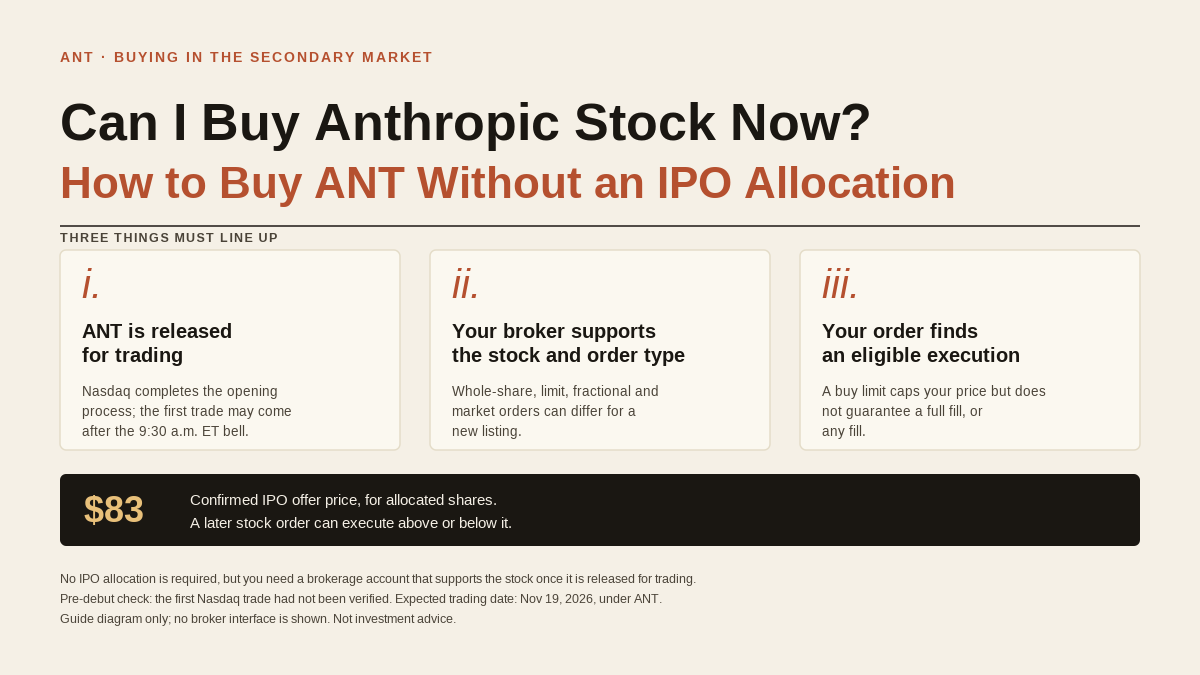
Can I Buy Anthropic Stock Now? How to Buy ANT Without an IPO Allocation
Can you buy Anthropic stock without an IPO allocation? Learn when ANT orders can fill, what $83 means, and how to handle zero or partial allocations.
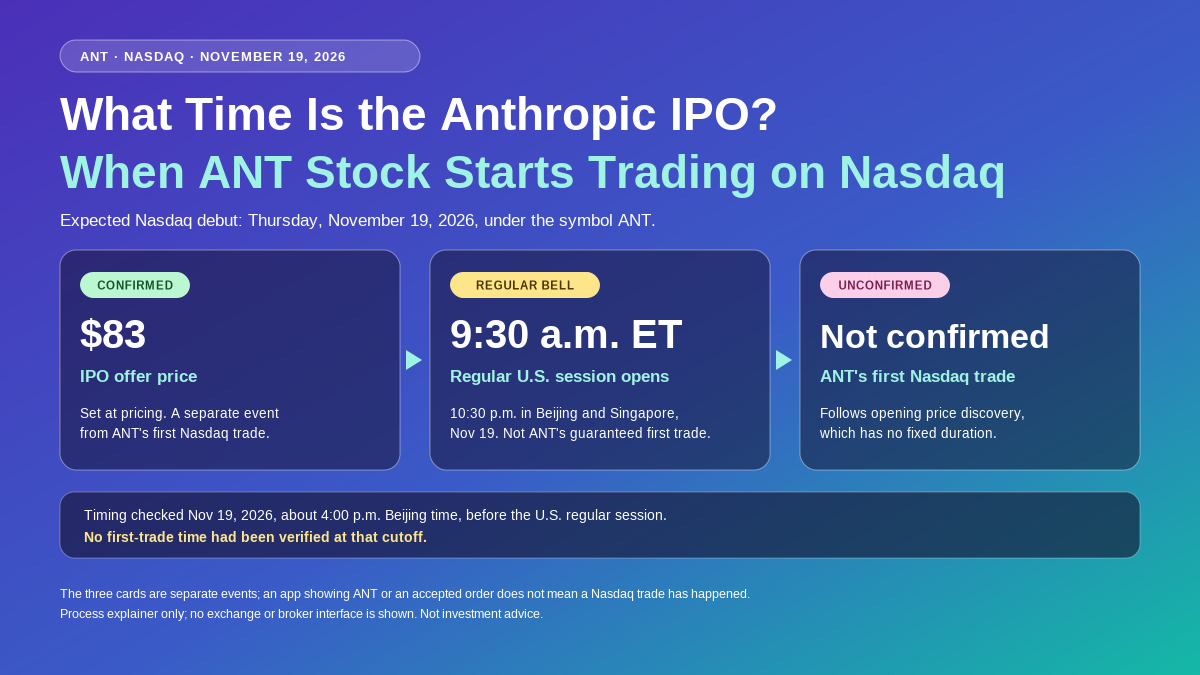
What Time Is the Anthropic IPO? When ANT Stock Starts Trading on Nasdaq
What time is the Anthropic IPO? Check ANT’s November 19 Nasdaq debut, global opening-bell times, the $83 offer price, and why orders may stay pending.

Samsung SDS Unveils Technology for Controlling KRW Stablecoin Issuance and Remittance Qualifications
Invesco moves stablecoin reserves on-chain, but hides a liquidity gap

xAI Requests Appeals Court to Block California AI Disclosure Law

Brazil's Central Bank Draws Line on Stablecoin Remittances, Concerned About Customer-Owned Overseas Transfers
SEC staff issue Molecule no-action letter on biotech tokens
How to Buy ATX Crypto: How to Verify Project ATX (ATX) Before Swapping
Learn how to buy ATX crypto on Solana. Verify the Project ATX mint, review swap quotes and fees, and confirm the exact token you receive on-chain.
Interpretation of South Korea's Digital Asset Law Proposal: ICO Ban Lifted, Banks to Lead Stablecoin
Binance to suspend crypto withdrawals across all networks on Nov. 25
[Basic Law] ④ The Exchange is Responsible for Public Disclosure of Listed Digital Assets
[Basic Law] ② Tether and Circle Must Establish Branches and Register with the Financial Services Commission to Operate in Korea
Latest articles


Latest coin listings on WEEX


