
Aptos Validators Decrease by 40% in Two Years, Concentration of Validator Nodes Shifts to Europe and America

 Prefer us on Google


Annual rewards drop from 7% to 2.6%, with USD income evaporating by 96%.
Written by: @r2Jamong
Compiled by: AididiaoJP, Foresight News
The distribution of Aptos validators is narrowing. This is not merely a decline in the number of nodes, but rather a process where network participants are re-evaluating their operational locations due to performance upgrades, reward design, and falling token prices.
As of October 2024, Aptos has 146 validator nodes distributed across 22 countries and 48 cities. Besides Europe and America, there are nodes in Singapore, Tokyo, Seoul, and Hong Kong, as well as in São Paulo, Johannesburg, and Sydney. Overall, it still represents a relatively broad global network.
In less than two years, by September 2026, the number of nodes will drop to 84, a decrease of 42%; the number of countries covered will fall to 13, and cities to 28, with a similar decline rate. The remaining nodes are mostly concentrated in America and Europe. Outside of these regions, only one node remains in Tokyo, with the previous multi-city layout in Asia having largely exited.
Two things are happening simultaneously: chain performance is improving, making it harder for validators to operate stably from remote locations; and the decline in rewards, coupled with falling token prices, has led to financial imbalances for some operators.
Faster Chain, More Important Location
The Baby Raptr upgrade in June 2025, along with AIP-131 (Velociraptr), has compressed Aptos's block time to under 50 milliseconds. This is a clear improvement for users and transactions; for validators, network conditions and server locations are no longer secondary variables.
Aptos rewards are calculated based on "staked amount × reward rate × validator proposal success rate." The further a node is from the validator's main cluster, the easier it is for the proposal success rate to decline under the same staked amount, leading to reduced income. Nodes dispersed across different continents are therefore the first to be constrained by these rules. Shutting down or migrating to Europe or America has become a more rational choice.
Performance improvements have also raised hardware thresholds. Coupled with AI demand driving up memory prices, the fixed costs for validators have further increased. Operators that are remote, small-scale, and have thin profits are the first to struggle to maintain operations.
There is an industry contradiction here: faster consensus mechanisms may inversely compress geographical diversity. Latency is a physical constraint, and rewards are linked to proposal success rates, causing nodes to naturally concentrate in low-latency areas. Decentralized distribution may gradually shrink due to performance goals.
Financial Constraints Determine Node Retention
The direct reason for node exits remains income. Validators earn revenue in tokens but pay for server, bandwidth, operations, and labor in USD. The two cost and income curves are in different market cycles.
Aptos's annual staking rewards have dropped from 7% in October 2024 to 2.6% in September 2026, a decrease of 63%. The path is clear: AIP-119 proposed in April 2025 reduced the rate from 7% to 5.19% starting in June of that year; the foundation's token economic adjustment proposed in February 2026 further lowered it to 2.6%. Validator income comes from commission shares in delegated staking rewards, and the reduction in reward rates synchronously decreases income for both delegators and operators.
What truly breaks financial balance is the price. During the same period, APT dropped from $9.50 to $0.58, a decline of 94%. After the reduction in nodes, the average staked amount per node increased from 5.75 million APT to 8.97 million APT, an increase of 56%. Staking is more concentrated, but the reduction in rewards and falling prices combined lead to a 96% decrease in annualized rewards when measured in USD.
A 56% increase in staking cannot compensate for a 96% evaporation of income. This is the arithmetic basis for the wave of exits.
The shift in token economics towards low issuance and low staking rewards has its rationale from a long-term dilution perspective. However, the cost is that validator businesses become thinner, and network distribution narrows accordingly. Tightening at the issuance end puts pressure on the operational end, making it difficult to balance both.
Other PoS Chains Face Similar Issues
Earning income in tokens while paying costs in fiat currency is not unique to Aptos. When the market weakens, marginal regions and small to medium operators often exit first. What remains are more exchanges, institutions, and professional nodes already located in American and European data centers.
The Ethereum community has similar discussions. EIP-8363 proposes to destroy a portion of newly issued rewards when staking scales up, to curb inflation and excessive staking growth. The direction is similar to Aptos's reduction in rewards, but it also requires assessing the economic resilience of validators.
When measuring decentralization, one cannot only look at the number of nodes and staking rates. The more critical question is: when token prices fall and reward policies adjust, will a sufficiently diverse group of operators still remain? The number of nodes can expand in a bull market but will be reordered by costs in a bear market.
At this stage, participants who can withstand short-term reward fluctuations are more important. Exchanges and institutions have other business supports, long-term service demands, and greater capacity to navigate downturns. Therefore, exchange staking and institutional validators have a positive significance for network stability. However, their increasing proportion may also weaken geographical and subject diversity. Stability and decentralization do not always align.
Another key factor is the entry threshold. Most public chains concentrate engineering resources on improving performance and throughput, and should also invest in efficiency optimization: achieving comparable performance with less hardware, lower electricity costs, and bandwidth. Once the threshold is lowered, new operators can enter, and existing operators can survive under low rewards. Otherwise, "global distribution" may remain only in documents, while actual nodes will still shrink to a few cloud regions.
-- Price
Long-term Decentralization Depends on Three Factors
The changes in Aptos over the past two years do not simply prove a "failure of decentralization," but reveal a set of specific constraints:
- Performance upgrades will change who is suitable to be a validator;
- Rewards and token prices determine who can still bear the operating costs;
- The participants that remain will shape the next phase of the network map.
Long-term decentralization ultimately depends on three points: having validators that can continue to operate during market downturns, effectively lowering operating costs, and keeping the entry environment open to new participants. Lacking any one of these, the number of nodes may look good in the short term, but geographical distribution will first narrow.
This content is provided for general informational purposes only and doesn't constitute financial, investment, legal, or tax advice. Any events, rewards, online promotions, or related information mentioned herein should not be considered a recommendation, solicitation, or invitation to purchase, sell, trade, or otherwise deal in any crypto assets. Crypto assets are highly volatile and may result in loss. The availability of WEEX services, products, and related events may vary by region. You are responsible for ensuring that your participation is in accordance with applicable local laws and regulations.
You may also like

The 10-Year Treasury Yield Just Did Something It Hasn't Done Since 2007, and History Has a Blunt Message for Stock Investors

LME Tightens Constraints on Large Aluminum Market Positions

JPMorgan: Physical AI's 'ChatGPT Moment' Expected as Early as Next Year

Bernstein Releases 'AI Sell-off Misjudgment List': Dell, Broadcom Among Top Picks, CoreWeave 'Hasn't Fallen Enough'

Where can Bitcoin count toward a US exchange’s operating reserves?

Why Is the ATX Crypto Price Different Across Platforms? Project ATX (ATX) Explained
See why the ATX crypto price varies across platforms. Compare Project ATX mint addresses, PumpSwap pools, and swap quotes for the same trade size.

Interpretation of South Korea's Digital Asset Law Proposal: ICO Ban Lifted, Banks to Lead Stablecoin

Tiger International's Q3 Customer Assets Surpass $64.8 Billion, Setting New Records in Hong Kong Market Net Inflows of Nearly $1 Billion

Ethereum ETF: $96 million in net inflows stop the November bleeding

Jito Proposal Allocates New Revenue Stream to Foundation Before Sharing with DAO After Reaching $20 Million

Aave’s USDC loans surge 36% to $2.6 billion as liquid collateral share plunges

TBV Connects with AAVE: Borrowing Money Without Giving Up Bitcoin, But Only 20 Coins Can Be Initially Accommodated

XRP borrowers face a $207,500 tipping point as one vault dominates an $8 million market

Wells Fargo Upgrades U.S. Large-Cap Stocks to 'Most Preferred' Rating, Last Week's Plunge Provides Buying Opportunity

LlamaRisk Proposes to Lower Collateral Rates for Coinbase Tokenized Stocks on Aave V4

Bonding Curve and LP Incentives: Key Modules and Evolution Trends of New Token Liquidity Mechanisms
India's Central Bank Proposes 'Trusted Person' Confirmation for Electronic Transfers

PAXG puts gold in a wallet. Getting the bullion out is another matter

XRP Ledger lending upgrade just 5 votes away from approval
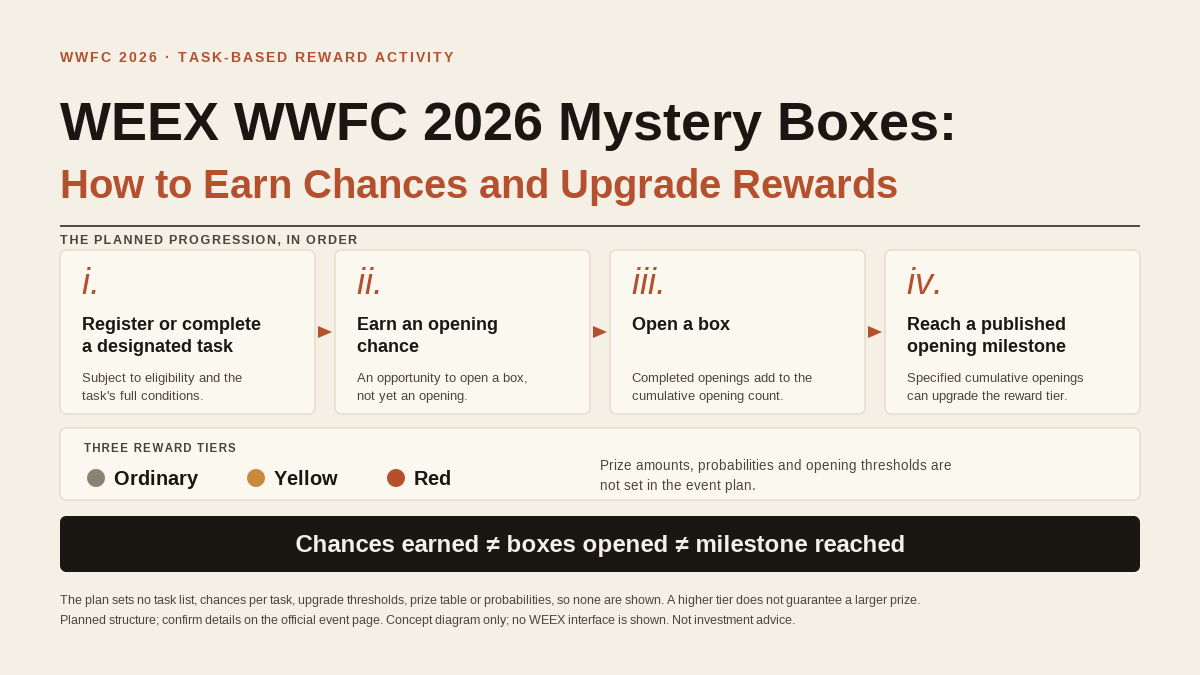
WEEX WWFC 2026 Mystery Boxes: How to Earn Chances and Upgrade Rewards
Explore WEEX WWFC 2026 mystery boxes: how to earn opening chances, understand three reward tiers, and track cumulative openings toward reward upgrades.

Crypto PNL vs Trading Volume: How WEEX WWFC 2026 Leaderboards Work
Compare crypto PNL, trading volume, and ROI with worked examples, and learn how to read the four planned WEEX WWFC 2026 leaderboards accurately.

Cardano’s $5M event budget faces 5 times more opposition

Repaying a Bitcoin-backed loan on Sui can leave you waiting to withdraw native BTC

Why Bitcoin’s quantum security upgrade may take years

Cysic CEO: Over 6 Million BTC Public Keys Exposed, Accounting for 31.2% of Circulation

Penetrating Social Trading Ledgers: Who is Really Making Profits Amidst the Traffic Noise?

Nearly two-thirds of Square Bitcoin payments were under $20

India Plans to Ease Disclosure Requirements for Foreign Investment Funds
Overview of 6 New AI Mining Projects: Perhaps the Most Noteworthy Track After Privacy Narratives
Bitcoin buyers face a trading issue as stablecoins just suffer their biggest supply drop since 2022
The 10-Year Treasury Yield Just Did Something It Hasn't Done Since 2007, and History Has a Blunt Message for Stock Investors
LME Tightens Constraints on Large Aluminum Market Positions
JPMorgan: Physical AI's 'ChatGPT Moment' Expected as Early as Next Year
Bernstein Releases 'AI Sell-off Misjudgment List': Dell, Broadcom Among Top Picks, CoreWeave 'Hasn't Fallen Enough'
Where can Bitcoin count toward a US exchange’s operating reserves?
Why Is the ATX Crypto Price Different Across Platforms? Project ATX (ATX) Explained
See why the ATX crypto price varies across platforms. Compare Project ATX mint addresses, PumpSwap pools, and swap quotes for the same trade size.
Latest articles


Latest coin listings on WEEX


