
Akash’s Solana plan would end current staking rewards while allowing new AKT issuance

 Prefer us on Google



Akash's proposed Solana migration would end the inflation-funded staking rewards paid on its current chain while its draft economic framework would allow new AKT issuance for provider incentives and the treasury.
Akash is a decentralized cloud-computing marketplace. Its AKT token helps govern and secure its sovereign Cosmos chain. The proposed migration would move the token and marketplace onto Solana in separate steps, with different consequences for balances, staking income and future supply.
Proposal 346 remained in voting when checked on Nov. 2, with a deadline of Nov. 2 at 15:02:58 UTC. A successful vote would authorize the migration and token portal. It would leave the marketplace's cutover date for another proposal.
That distinction matters because a promise to exchange one old AKT for one SPL AKT preserves a balance at conversion. It does not, by itself, preserve the income attached to holding or staking that balance.
Staking income and incentive emissions
The proposal separates approval, token launch, marketplace cutover and the old chain's eventual halt. Old-chain inflation and staking rewards would end at cutover. Validator roles and income would end at halt, 90 days later.
The submitted proposal expects SPL AKT and the one-way portal to launch two to three weeks after passage, once token and portal audits are complete. The marketplace would move only after its audits and migration rehearsals pass and a separate cutover proposal is approved.
The proposal now being voted on describes a portal transaction that starts unbonding, claims rewards and queues migration after 21 days. Earlier descriptions differ: the Oct. 20 technical draft uses seven days to token launch and 14 days for unbonding, while the Oct. 26 blog says two weeks to launch and unbonding for 21 days before using the portal.
Those descriptions do not establish one settled user flow. The current proposal sets the authorization being voted on; final audited instructions would still need to reconcile the older draft and the blog.
In his Oct. 26 explanation, Greg Osuri said new staking mechanisms would be announced before cutover. That establishes a commitment to explain a replacement, rather than a published replacement yield or payout formula.
Who could receive new AKT
Akash's AEP-79 migration design makes a separate provision for replacement emissions: newly issued AKT directed to provider incentives and the community treasury. It describes reduced gross emissions as the intended direction, but leaves the numerical curve for modeling and governance.
Under the proposed design, a holder could lose the present inflation-funded staking income while new tokens continued to be issued for other purposes. Issuance to those accounts would expand the token base without automatically increasing a passive holder's balance.
The unresolved economic modeling covers the gross rate, decay, split between recipients and cumulative hard-cap amount. Those determine both how much new AKT could enter supply and how its distribution would change over time.
The token-migration draft specifies a cumulative incentive-emissions cap separate from the migration budget. Its numerical amount remains unresolved; once set from the ratified model, the cap could not be raised by governance. The schedule would remain adjustable through the DAO and a timelock within that limit, with a guardian able to pause emissions.
The draft also allows a paused start. If the model has not been ratified before the cutover supply snapshot, the token-issuance program would start with zero scheduled emissions and wait for governance activation. That is a contingency in the design, rather than a decision to end issuance permanently.
These are proposed controls over a future program. They supply no final numerical ceiling, emission rate or date on which replacement incentives would begin.
Compute credits and the supply question
Compute payments could also affect how much AKT remains available to trade. Their supply implications depend on the accounting model, and the roadmap and proposed Solana design describe different limits.
Akash's AEP-76 roadmap describes ACT as a nontransferable, dollar-denominated compute credit. Its proposed burn-mint equilibrium (BME) model links funding those credits to AKT removed from liquid circulation.
The roadmap's detailed vault model uses previously removed AKT and remint credits first. If those are insufficient to meet a payout, it describes minting a shortfall. That describes a possible issuance path within the roadmap's model; compute usage alone is not enough to establish a permanent net burn.
The proposed Solana architecture specifies a different limit: AKT supplied for ACT stays in a vault as collateral, and ACT redemption is paid from that vault. It expressly forbids the BME program from minting AKT.
The document also leaves current-chain vault payouts versus fresh minting as an implementation question. The roadmap's shortfall-minting description consequently does not establish a fresh-minting path for the proposed Solana system.
The supply effects need to be separated: tokens represented through migration, new incentive emissions, and AKT moving into and out of compute-credit collateral. A vault balance temporarily removed from trading is not the same thing as tokens permanently destroyed.
The proposed portal would remain open for two years, with migration irreversible. Its 1:1 accounting answers how eligible token balances would be represented on Solana. The future emissions curve and replacement staking terms answer different questions about holders' income and exposure to issuance.
The proposal says the emissions curve must be published before the later cutover proposal. Alongside the promised staking details and resolved compute-credit accounting, it would give holders the information needed to judge the post-migration model.
-- Price
This content is provided for general informational purposes only and doesn't constitute financial, investment, legal, or tax advice. Any events, rewards, online promotions, or related information mentioned herein should not be considered a recommendation, solicitation, or invitation to purchase, sell, trade, or otherwise deal in any crypto assets. Crypto assets are highly volatile and may result in loss. The availability of WEEX services, products, and related events may vary by region. You are responsible for ensuring that your participation is in accordance with applicable local laws and regulations.
You may also like
Republican Senator Criticizes Trump for Pressuring Nvidia Board

Return to Trading Ends, Facing 100% Rate Hike Next?

South Korea's AI Chip Exports Boost Expectations for Won Appreciation

Oklo Stock Faces Cash Flow Challenges, Valuation Drops to Below 4 Billion

U.S. Justice Department Charges Over 800 in Largest Fraud Crackdown, Freezes Over $1 Billion in Assets

Intel stock falls 8.1% amid investor retreat

Workday Q3 Earnings Exceed Expectations, Q4 Subscription Revenue Guidance Below Expectations

Nutanix Q1 Earnings Per Share at $0.73, Full-Year Revenue Guidance Below Expectations

Dell Just Reported Earnings and Raised Its Forecast by $10 Billion. Is the Stock a Buy After Tuesday's Selloff?

Strategy's Business Value Falls Below Its BTC and Bitmine Approaches 5% of ETH: What Remains of the Model...

Ethereum: AI Becomes a More Urgent Threat than Quantum

OPEC+ to Finalize 2027 Production Policy Amid Intensified Uncertainty from Iran War and Internal Disputes

The Battle of Personal Agents: Ambition and Restraint

Payment Giant Stripe Negotiates Acquisition Offer Valued Over $200 Billion, Launches Stablecoin Spending Card with Deel

Ansem and Satoshi Nakamoto: Living Under the Same 'Stolen' Roof
Quickben22 Rechecks 2018 Bitcoin Dormant Address List: Nearly 10,000 Dormant Addresses Restart Transfers After Eight Years, Transferring a Total of 245,000 BTC

Flop Labs Led by Arthur Hayes Launches FLOP Testnet, Initial Airdrop Scoring Not Yet Started

Bank of America Releases 2027 Investment Outlook: Global Stock Markets Could Rise 4%-8%! Improved Financial Environment Allows for Cryptocurrency Investments
Bitcoin developers propose fix for transaction verification gap affecting Lightning wallets

UBS Downgrades Aixtron to Sell, Expects AI Optical Communication Equipment Demand to Slow by 2028, Shares Plunge Over 10%

Unitree Stock Hits 20% Limit-Up: What Drove the November 23 Surge
Unitree Robotics (688836) hit its 20% limit-up at ¥708 on Nov 23, 2026. See the price data, the reported catalysts, the valuation context and what is unconfirmed.
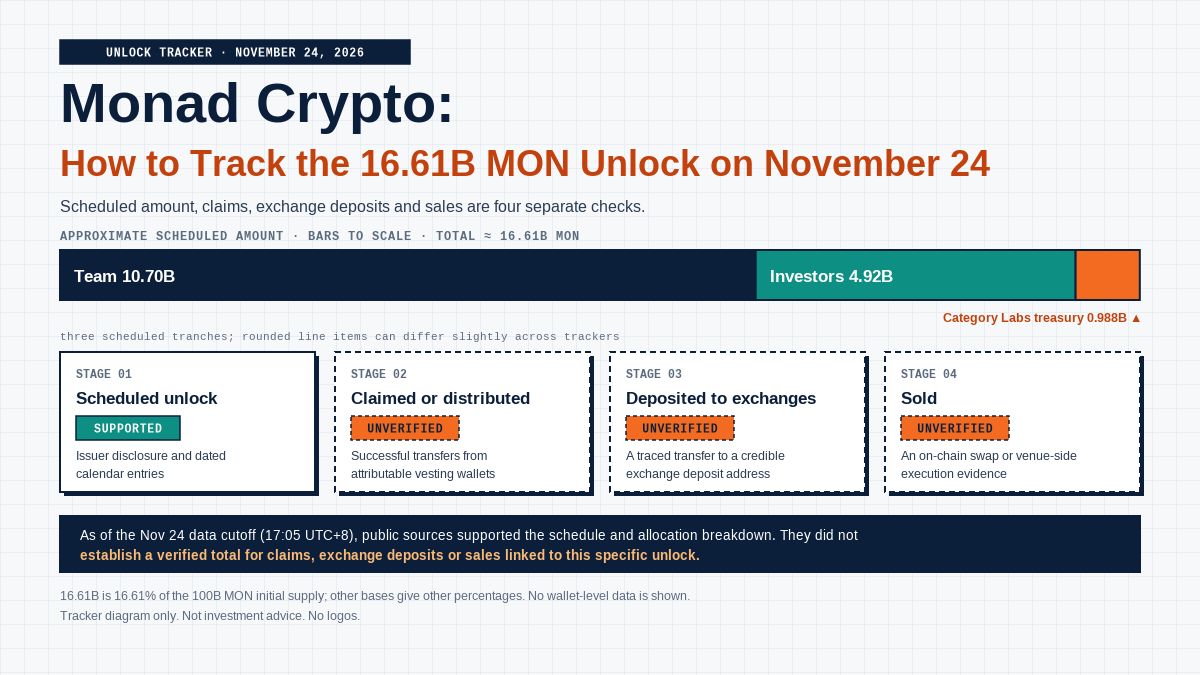
Monad Crypto: How to Track the 16.61B MON Unlock on November 24
Track Monad’s 16.61B MON unlock on November 24. See the team, investor, and treasury allocations, and learn how to verify claims and exchange deposits.

China Launches AI Standardization Pilot in Five Free Trade Zones
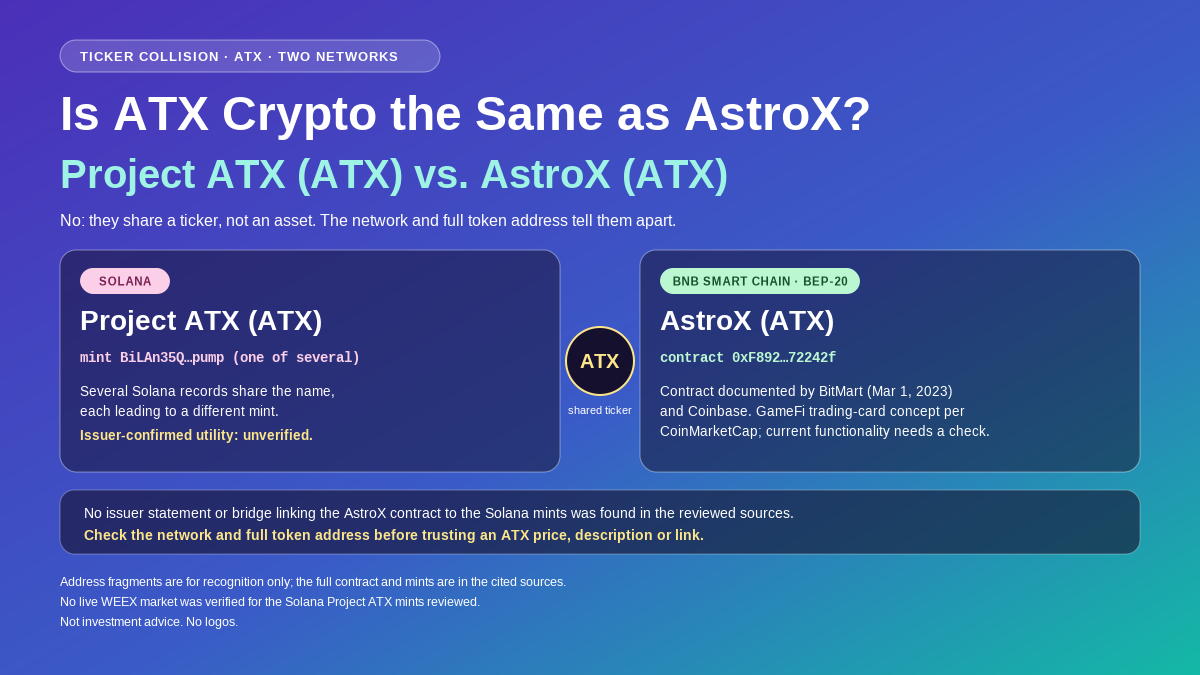
Is ATX Crypto the Same as AstroX? Project ATX (ATX) vs. AstroX (ATX)
Compare Project ATX on Solana with AstroX on BNB Smart Chain. Learn how to verify each token address before trusting an ATX price or buying guide.

Bayer Signals Future Pharmaceutical Deals May Target Mid-Stage Clinical Assets

Ethereum ETF: $96 million in net inflows stop the November bleeding
AI Agents in Payments: Cards Dominate, Yet Stablecoins Fill the 'Gap'|a16z Frontier

Grayscale Claims Bitcoin and Major Assets Are Oversold, Market Outlook Affected by AI Risks
Jensen Huang's "Miraculous Return" Forces Investment Banks to Rewrite Reports Overnight

Applied Digital Stock Surged 20% on a Hyperscaler Deal. What to Know About Its $41 Billion in Leases
Republican Senator Criticizes Trump for Pressuring Nvidia Board
Return to Trading Ends, Facing 100% Rate Hike Next?
South Korea's AI Chip Exports Boost Expectations for Won Appreciation
Oklo Stock Faces Cash Flow Challenges, Valuation Drops to Below 4 Billion
U.S. Justice Department Charges Over 800 in Largest Fraud Crackdown, Freezes Over $1 Billion in Assets
Intel stock falls 8.1% amid investor retreat
Latest articles


Latest coin listings on WEEX


